
Worldschooling
Our simple guide to learning while travelling full-time as a family.
Not sure where to start?
What is Worldschooling?
Worldschooling is simply educating your kids while travelling.

You don’t need to recreate school or a full school day. You just need to cover the basics consistently and build learning into everyday life.

This page gives you a simple starting point so you can actually do this.
What Should You Actually Teach?
Most parents get stuck here.
Below is a simplified breakdown of the Australian Schooling Curriculum (which is similar to many western curriculums) to give you an overview.
The truth is, if your child is reading, writing, and practicing maths regularly as per the below age levels, they are not falling behind.
Ages 5 - 8
Focus on learning to read, basic writing, and simple maths like addition and subtraction. Build confidence and curiosity.
Ages 8 - 12
Reading fluently, writing paragraphs, multiplication and division, and real-world maths like money and time.
Ages 12–16
Clear writing, expressing ideas, algebra basics, percentages, and problem solving.
Ages 16+
Communication, independence, and either practical maths or advanced maths depending on their path.
The key thing most people miss
Learning is not just about time.
It’s about:
Focus
Engagement
Understanding
10 minutes of focused learning is more valuable than 30 minutes of distracted learning
Daily Structure
Most kids can cover what they need in a short, focused block, especially when it’s one-on-one.
The structure should match your child’s age and attention span.
Below is a simplified breakdown of kids’ developmental capabilities based on age groups.
Think: short bursts, keep it light
Reading: 5–10 mins
Writing: 5–10 mins
Maths: 5–10 mins
Total: ~20–30 mins
Ages 5 - 7
Starting to build focus
Reading: 10–20 mins
Writing: 10–15 mins
Maths: 10–20 mins
Total: ~30–60 mins
Ages 7 - 10
Can handle more structure
Reading: 20–30 mins
Writing: 15–25 mins
Maths: 20–30 mins
Total: ~60–90 mins.
Ages 10–13
More independent
Reading: 30+ mins
Writing: 20–30 mins
Maths: 30+ mins
Total: ~1.5–2+ hours (depending on goals)
Ages 13+
What Actually Worked For Us
We didn’t get this right straight away.
We started with workbooks from home, thinking that would cover everything. They didn’t. The kids weren’t engaged and nothing was really sticking.
Then we moved to apps and tablets. It looked like it was working, but they were just clicking through without understanding anything and spending way too much time on screens.
The turning point came when we realised it was affecting more than just school. Their focus, creativity, and willingness to do hard things had dropped.
So we stripped everything back and now we keep it simple. We do short, focused sessions, sitting down with them, teaching properly.
And it’s working far better.
→ Read the full story of How We Figured Out Our Worldschooling Rhythm
Learning Outside School
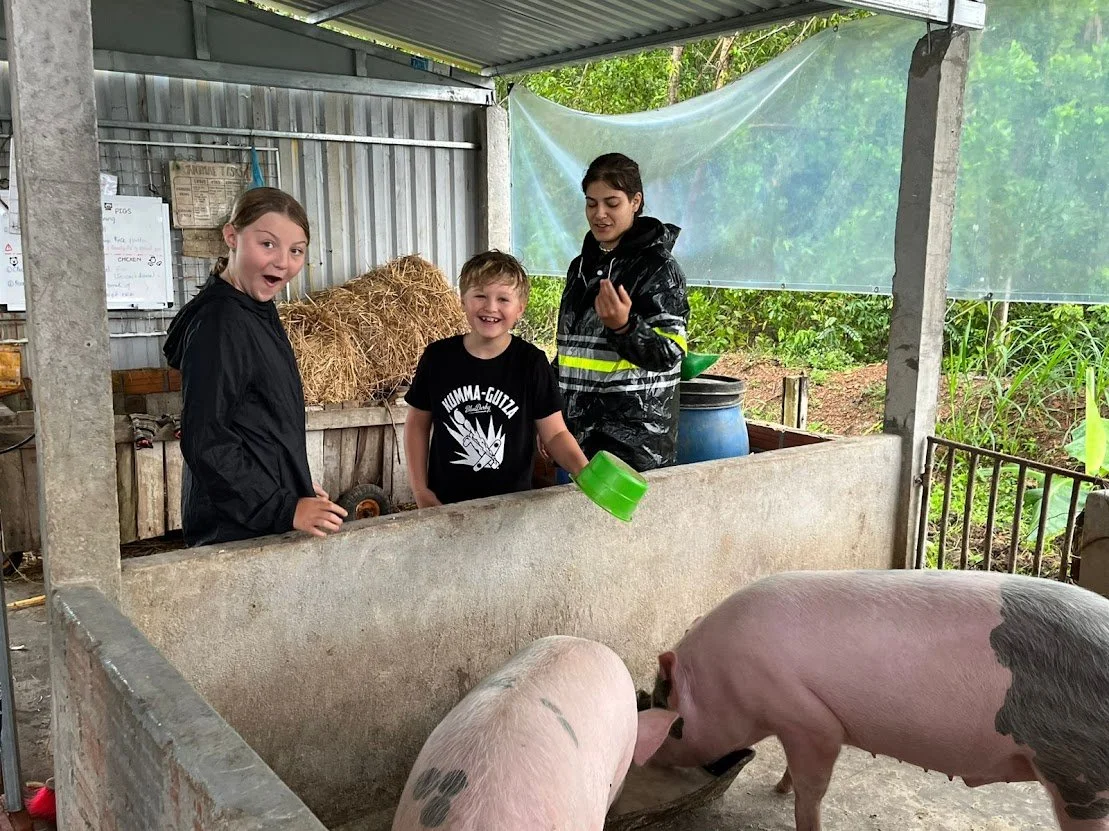
A big part of worldschooling doesn’t happen sitting at a table. It happens in everyday moments while travelling.
Things like:
Ordering food
Handling money
Navigating new places
Talking to people
Trying new activities
Solving problems on the go
This is real-world learning, and it counts. In a lot of ways, they’re building skills that are harder to teach in a classroom, confidence, independence, communication, and adaptability.
Worldschooling Hubs
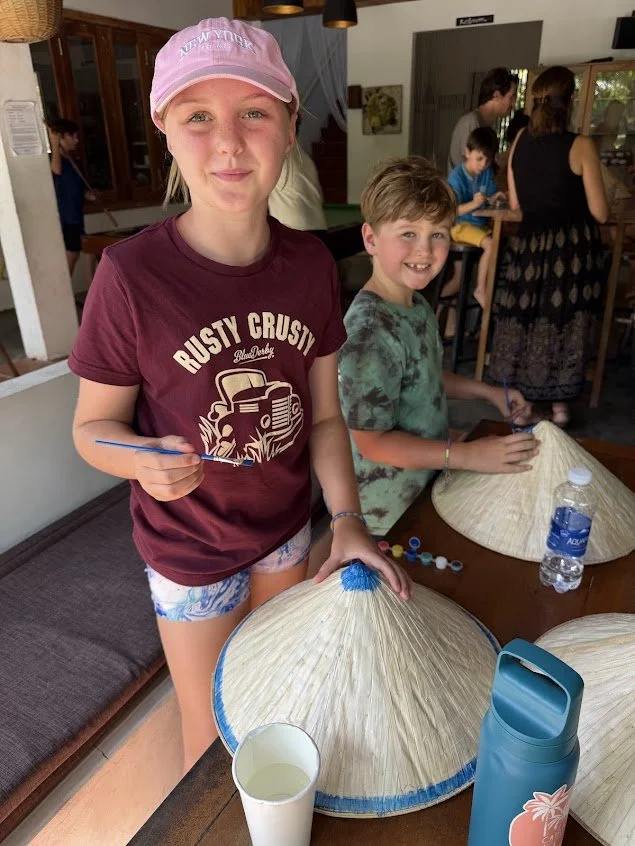
These are places around the world where families naturally gather, making it easier to connect, find rhythm, and give kids some consistency while travelling.
You don’t need a “hub” to worldschool, but if you’re worried about your kids’ making connections along the way, they are a great place to find community while travelling.
Not all worldschooling hubs are the same. In fact, most are completely different from each other. Understanding the type of hub is just as important as the location.
What matters most
You don’t need a perfect system.
You don’t need the best apps or the right curriculum.
What matters is showing up consistently and keeping it simple.
Some days will work well. Some won’t.
Over time, it adds up.
Go deeper
If you want to see how this actually looks in real life: