
What a World Schooling Hub Really Looks Like for a Travelling Family
Before we left, the idea of a world schooling hub sounded almost too good to be true.
A place where travelling families come together. Kids learning alongside other kids. Parents sharing the load. Community, connection, and structure without the rigidity of traditional school.
After spending time in a world schooling hub during our travels, I can say this with confidence: it is not a perfect solution, but it is an incredibly powerful one.
The First Night We Thought We Had Made a Huge Mistake
The first night was chaos.
We arrived tired from travel, carrying bags, kids overstimulated, everyone trying to settle into an unfamiliar space at the same time. There was noise, movement, and a lot happening all at once.
That night, once the kids were finally asleep, I remember thinking very clearly: we have made a huge mistake.
It felt overwhelming. Too busy. Too intense. Too much change stacked on top of change. After weeks of adjusting to travel, this suddenly felt like one layer too many.
But by the next morning, everything had calmed right down, the chaos from the night before was gone and it was smooth sailing from there on out.
Finding Our Rhythm Inside the Hub
As the days unfolded, everything began to settle.
We started to recognise faces. The noise softened into background energy. The chaos turned into movement with purpose. The kids relaxed. We relaxed.
The hub gave us something we did not realise we needed so badly: rhythm.
There were loose schedules, shared expectations, and familiar faces. Not rigid timetables, but enough structure to anchor the days. The kids knew when learning time was. They knew when play would happen. They knew they were not alone in this experience.
For us as parents, that mattered more than we expected.
Learning Without the Pressure
What stood out almost immediately was how different learning felt inside the hub.
Every family had a different routine, and it was a great platform for us to ask questions, soak it all in, and work it out for ourselves. There was no comparison. Kids learned at their own pace, often without even realising they were learning at all.
Some days looked like reading and writing. Other days were creative projects, group discussions, outdoor play, or cultural experiences tied directly to where we were living.
Our kids were more engaged than they had been in weeks. Not because the work was easier, but because it felt meaningful and shared.
Meeting Families Doing the Same Thing
One of the most powerful parts of the hub was the people.
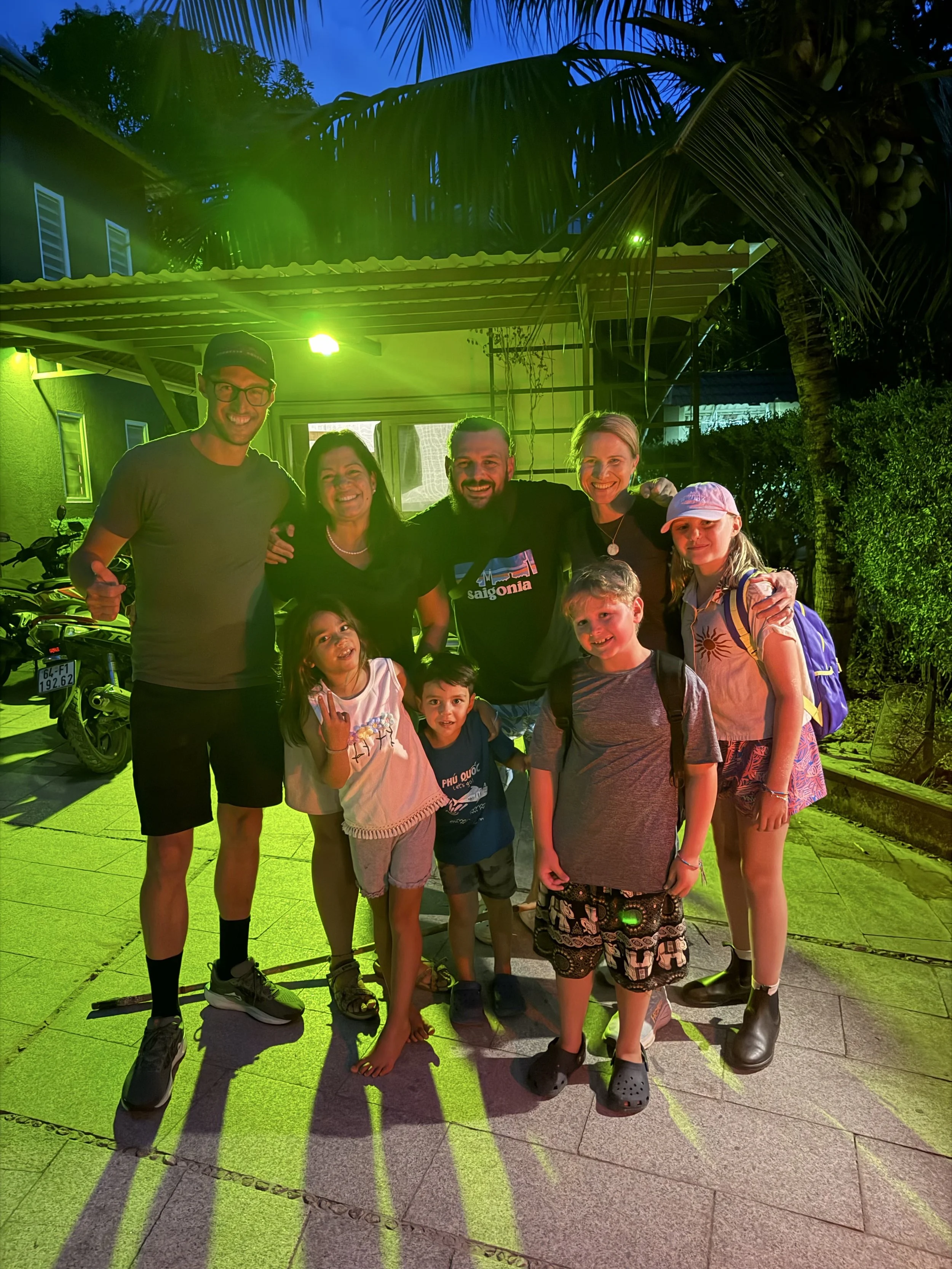
We met families from all over the world who were doing the same thing we are. Different countries, different backgrounds, different reasons for travelling, but the same underlying intention. To slow down. To spend time with our kids. To experience life differently.
Conversations happened easily. Stories were shared over meals, car rides, beach days, and coffee. There was an unspoken understanding that this life is incredible, but also challenging.
For the kids, friendships formed quickly and deeply. For us, it felt grounding to be surrounded by people who understood this lifestyle without needing explanation.
Parents Need Community Too
World schooling hubs are not just for kids.
Being surrounded by other parents navigating the same questions, doubts, and challenges was quietly reassuring. Advice was shared without judgement. Support was offered without being asked for.
It reminded us that while this journey is unconventional, it does not have to be lonely.
It Is Not Perfect, and That Is the Point
This is important to say.
A world schooling hub is not a magic fix. Not every day works. Not every activity clicks. Some kids thrive instantly, others take time. Energy levels fluctuate. Travel fatigue still exists.
But the difference is that you are not navigating those moments alone.
If a day does not work, that is okay. If a child needs downtime, that is respected. If learning looks different week to week, no one panics.
That flexibility is the real strength.
What It Taught Us About Education
Spending time in a world schooling hub has reshaped how we think about education.
Learning does not need to be loud to be effective.
Progress does not need to be linear.
Structure and freedom can exist together.
Community matters more than curriculum.
Most importantly, kids learn best when they feel safe, connected, and curious.
Everything else is secondary.
Would We Do It Again?
Without hesitation, yes.
Not because it solved everything, but because it added something deeply valuable to our journey. It gave our kids connection. It gave us perspective. It reminded us that while this life is different, it is not as strange or isolating as it can sometimes feel.
That first night felt like a mistake.
By the end, it felt like one of the best decisions we have made so far.
Added bonus, now we have friends from all over the world!