
Slow Living in the Puglia Region, Southern Italy
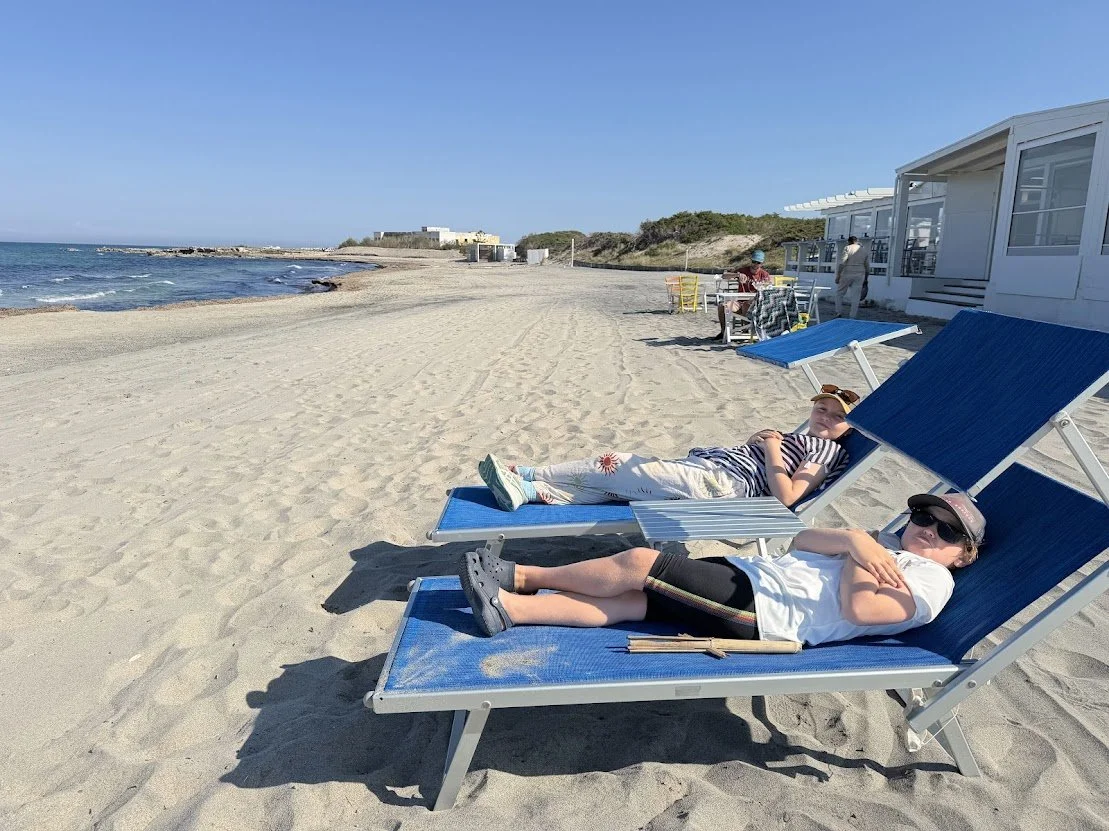
There was something about Puglia that felt different from the rest of Italy almost immediately.
It felt slower, more relaxed, and far more grounded than the bigger tourist regions we’d visited beforehand. After the rough edges of Sicily, Puglia felt like we’d stepped into a version of Italy where life revolved less around sightseeing and more around simply living well.
We arrived into Bari after a super short flight from Palermo. The flight barely felt long enough to settle in before we were descending again. The easy travel day quickly turned into a wet one though, with rain hitting as soon as we landed and our accommodation host not responding about early check-in.
So there we were again, dragging backpacks and suitcases through wet streets trying to kill hours before we could get inside.
We eventually found a little coffee shop to regroup in before settling into a restaurant that thankfully let us sit inside with all our luggage piled around us. Not exactly glamorous travel content, but pretty accurate long-term family travel reality.
Once we settled in though, Bari quickly grew on us.
The old town, Bari Vecchia, felt alive in a way that some tourist-heavy cities don’t anymore. Narrow laneways twisted through old stone buildings while locals sat outside chatting, scooters squeezed through impossible gaps, and families filled the streets well into the evening.
One of the biggest surprises was stumbling across street car racing near the waterfront. We had no idea it was happening. Roads were lined with barriers, crowds packed the streets, and race cars screamed through the city with the sound echoing off the old buildings. The kids thought it was unreal.
And then there was the food.
Fresh focaccia became almost a daily ritual from that point forward.
From Bari, we caught the train south to Lecce before organising a private transfer across to San Foca, where we’d spend most of our time in the region.
Lecce felt completely different again.
Where Bari felt gritty and energetic, Lecce felt elegant. The city is famous for its Baroque architecture, and the soft golden limestone buildings honestly glowed in the afternoon sun. Every street seemed to open into another beautiful piazza, church, wine bar, or little restaurant.
It felt polished without losing its authenticity.
But it was San Foca where we really settled into life.
By this point in the trip, we were no longer trying to cram every day with sightseeing. We’d naturally fallen into more of a rhythm, and San Foca suited that perfectly.
Most mornings started slowly with coffees at the apartment before the kids wandered down to grab fresh bread rolls, ham, and bits and pieces from the local shops. We’d fit schoolwork in where we could, usually in the mornings before heading out, because once you left the house in Italy it was hard to drag everyone back into “school mode.”
Afternoons often revolved around the beach, walks along the coastline, or just hanging around town. The water around San Foca was ridiculously clear, with bright turquoise sections that honestly didn’t feel real at times.
What we loved most was how local everything still felt because we arrived before peak season. Some restaurants were only just reopening for summer, beaches were still relatively quiet, and there were days where parts of the coastline felt almost empty.
We originally looked at hiring a car for our entire stay in Puglia, but the prices were ridiculous once insurance and extra fees were added in. Eventually we found a local guy renting cars privately for a much better price, and that changed everything for us.
Having the car gave us freedom to properly explore the region.
One of our favourite day trips was driving across to Alberobello.
The drive itself took us through endless olive groves, little farming towns, and quiet countryside before suddenly arriving at these strange little white stone buildings with cone-shaped roofs scattered across the hills.
The trulli houses honestly looked like something from a fantasy movie.
Alberobello dates back centuries, and the trulli were originally built using dry stone construction, supposedly so they could be dismantled quickly to avoid taxes during the Kingdom of Naples. Whether the full story is true or not, the town felt incredibly unique.
Walking through the narrow streets with the kids felt surreal because the buildings almost looked fake in person.
What stood out most about Puglia though wasn’t one specific attraction.
It was the lifestyle.
People spent time together there. Meals stretched for hours. Kids stayed out late playing in piazzas. Everything happened outdoors. Nobody seemed particularly rushed, and daily life felt far more social and connected than what we’re used to back home.
Compared to some of the more polished destinations in Europe, Puglia still felt imperfect in places, but that was exactly why we liked it.
It felt lived in.
And for us, that ended up being the real magic of southern Italy.